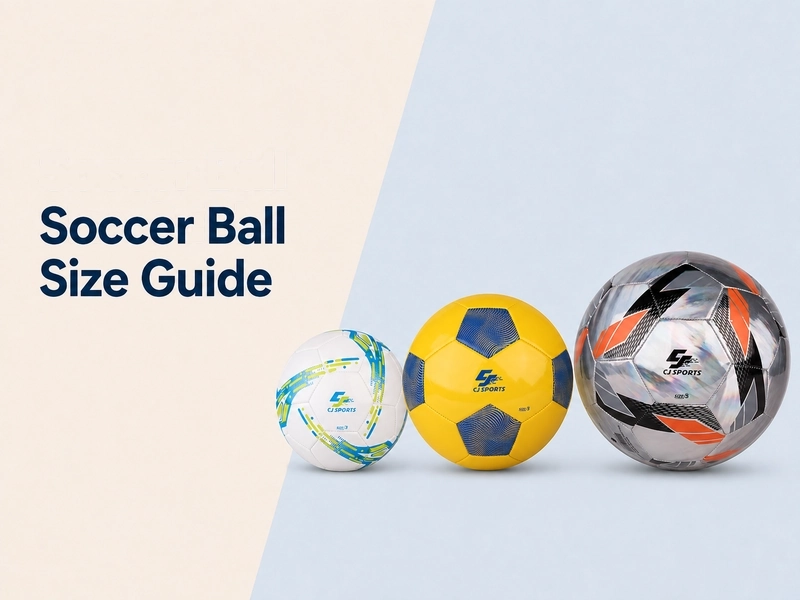
Choosing the right soccer ball size makes the ball easier to control, pass and shoot. It is especially important for younger players, who may struggle to develop proper technique when using a ball that is too large or heavy.
Soccer balls are commonly available in Sizes 1, 2, 3, 4 and 5. Size 3 is generally used by younger children, Size 4 by youth players, and Size 5 by older youth and adults. Sizes 1 and 2 are mainly used for skills training, recreation or promotional purposes.
However, age charts should be treated as general guidance. Ball-size requirements can vary between leagues, schools and soccer associations. Always confirm the required size with the relevant organizer before purchasing balls for a team or competition.
1. Soccer Ball Size Chart by Age: Sizes 1–5 in cm and Inches
The following soccer ball size chart compares typical age groups, circumference, weight and common uses.
| Soccer Ball Size | Recommended Age | Circumference | Typical Weight | Common Use |
|---|---|---|---|---|
| Size 1 | All ages | Approximately 46–51 cm / 18–20 inches | Varies by manufacturer | Skills training, souvenirs and promotional balls |
| Size 2 | All ages | Approximately 51–56 cm / 20–22 inches | Varies by manufacturer | Skills practice and recreational use |
| Size 3 | Generally under 8 | Approximately 58.5–61 cm / 23–24 inches | About 300–320 g | Junior soccer and beginner training |
| Size 4 | Generally ages 8–12 | Approximately 63.5–66 cm / 25–26 inches | About 350–390 g | Youth soccer and training |
| Size 5 | Generally ages 13 and older | 68–70 cm / 27–28 inches | 410–450 g for an adult match ball | Older youth, adult and professional soccer |
The dimensions shown above are general industry ranges and may vary slightly between manufacturers or leagues. The Size 5 match-ball measurements are based on the requirements in IFAB Law 2.
For buyers sourcing soccer balls in bulk, the size number should be treated as the starting point rather than the complete product specification. Weight, construction, materials and intended use should also be confirmed before ordering.
2. CJ Sports Soccer Ball Size Specifications
The measurements above are general industry ranges and may vary slightly between manufacturers. For reference, the table below shows the standard size specifications used for CJ Sports soccer balls.
| Size | Recommended Age | Circumference | Weight |
|---|---|---|---|
| Size 1 | 4 and under | 46–48 cm | 200–250 g |
| Size 2 | 4 and under | 51–53 cm | 250–280 g |
| Size 3 | 8 and under | 60–62 cm | 310–340 g |
| Size 4 | Ages 8–12 | 64–66 cm | 350–390 g |
| Size 5 | Ages 13+ | 68–70 cm | 410–450 g |
These figures represent CJ Sports’ standard soccer ball specifications. Custom circumference, weight, materials and construction may be available depending on the intended market and application.
For OEM and private-label projects, buyers can also specify requirements such as cover material, panel construction, bladder type, printing, colors, logos and packaging.
Need a Different Soccer Ball Specification?
Tell us your target size, weight, material, construction and order quantity. We can develop a soccer ball specification for your market or project.
Get a Custom Quote3. How to Choose a Soccer Ball Size by Age
Age is the quickest way to identify an appropriate soccer ball size, but it should not be the only factor.
The player’s league, competition level, training purpose and type of soccer should also be considered. A team playing outdoor soccer may need a different ball from a futsal team, even when the players are the same age.
3.1 Soccer Ball Size for Children Under 8
A Size 3 soccer ball is generally recommended for players under eight years old.
Its smaller circumference and lower weight make it easier for young players to:
- Control the ball with their feet
- Practice passing and dribbling
- Develop correct shooting technique
- Build confidence without using an oversized ball
Some very young children may begin with a Size 1 or Size 2 skills ball, but these mini balls are normally training tools rather than standard league balls.
3.2 Soccer Ball Size for Ages 8–12
A Size 4 soccer ball is commonly used by players between eight and twelve years old.
It provides a transition between the smaller Size 3 and the full-size Size 5. It allows youth players to improve their control, passing distance and shooting power before moving to the adult-size ball.
Age requirements are not identical in every league. Some competitions change to Size 5 at U12, while others continue using Size 4 for the full U12 age group.
3.3 Soccer Ball Size for Ages 13 and Older
Players aged 13 and older generally use a Size 5 soccer ball.
Size 5 is the standard size used for adult outdoor soccer, including high-school, club and professional matches. It is also the size normally associated with official match balls.
Before ordering for a team, check whether the competition specifies:
- Ball size
- Weight
- Air pressure
- Quality certification
- Approved brand or model
- Match-ball construction
4. Soccer Ball Sizes 1–5 Explained
The size number describes the approximate circumference category of a soccer ball, but it does not tell you everything about its performance, quality or intended use.
Balls carrying the same size number may still differ considerably in weight, materials, panel construction, bladder, rebound and durability.
4.1 Size 1 and Size 2 Soccer Balls for Skills Training
Sizes 1 and 2 are smaller than the balls normally used in organized youth or adult matches.
They are useful for close-control drills, juggling, coordination exercises, souvenirs and promotional programs.
What Is a Size 1 Soccer Ball Used For?
A Size 1 soccer ball is often called a mini ball or skills ball.
It can be used by players of any age for:
- Juggling practice
- Close ball-control drills
- Footwork exercises
- Indoor recreation
- Autographs and display
- Branded promotional gifts
Because Size 1 balls are not normally used for standard outdoor matches, their weight and exact construction can differ considerably between products.
What Is a Size 2 Soccer Ball Used For?
A Size 2 soccer ball is slightly larger than a Size 1 ball but smaller than a junior Size 3 ball.
It is usually used for skills practice and recreational play. Size 2 is less common because it serves a similar purpose to Size 1 and is not widely adopted as a standard league size.
Are Size 1 and Size 2 Official Match Balls?
Sizes 1 and 2 are generally not used for standard outdoor league matches.
Manufacturers may offer different circumference and weight specifications for these sizes. Buyers should therefore confirm the actual product measurements instead of relying only on the size number.
4.2 Size 3 Soccer Ball for Young Players
A Size 3 soccer ball is the smallest size commonly used in organized junior soccer.
Size 3 Soccer Ball Dimensions
A typical Size 3 soccer ball has:
- Circumference: approximately 58.5–61 cm
- Circumference in inches: approximately 23–24 inches
- Weight: commonly around 300–320 g
These values can vary slightly according to the manufacturer and league specification.
Who Should Use a Size 3 Soccer Ball?
Size 3 is generally suitable for children under eight. Some leagues describe this group as U5–U8, while others use different age divisions.
Parents, coaches and equipment buyers should check the rules of the specific youth program before ordering.
Size 3 Training Ball vs Match Ball
Two balls can both be labeled Size 3 while having different materials, construction methods and performance levels.
A training ball may prioritize durability and repeated use. A match ball may use a softer cover, more precise construction and tighter performance tolerances.
The number “3” describes the approximate size category. It does not automatically indicate the quality or intended use of the ball.
4.3 Size 4 Soccer Ball for Youth Soccer
Size 4 is commonly used as the youth soccer ball between Size 3 and the adult Size 5.
Size 4 Soccer Ball Dimensions
A typical Size 4 soccer ball has:
- Circumference: approximately 63.5–66 cm
- Circumference in inches: approximately 25–26 inches
- Weight: commonly around 350–390 g
The exact specification should be confirmed when the balls are intended for a league or tournament.
What Age Uses a Size 4 Soccer Ball?
Size 4 is generally recommended for players aged 8–12.
However, there is no single age chart used by every organization. The transition from Size 4 to Size 5 may happen at different U-levels depending on the league.
Is a Size 4 Soccer Ball Used in Official Matches?
Yes. Size 4 balls are used in many organized youth matches.
However, the relevant competition determines the required ball. Buyers should not assume that every league serving the same age group follows identical rules.
4.4 Size 5 Soccer Ball and Official Match Specifications
Size 5 is the largest standard soccer ball size and is used by older youth players and adults.
Size 5 Soccer Ball Dimensions
Under IFAB Law 2, a ball used for a standard adult match must be:
- Spherical
- Made from suitable material
- 68–70 cm in circumference
- 27–28 inches in circumference
- 410–450 g in weight at the start of the match
- Inflated to 0.6–1.1 atmosphere at sea level
These are the official minimum match requirements. Individual competitions may require additional quality marks or performance standards.
What Age Uses a Size 5 Soccer Ball?
Size 5 is generally recommended for players aged 13 and older. It is used in older youth, high-school, adult and professional soccer.
Because youth rules vary, teams close to the Size 4–Size 5 transition should confirm their league requirements before purchasing.
Is Size 5 the Official Soccer Ball Size?
Size 5 is the official size used for standard adult outdoor soccer matches.
However, “Size 5” does not mean that every ball is approved for professional competition. A Size 5 promotional ball, training ball and professional match ball may have the same approximate circumference but very different materials and performance.
Does Every Size 5 Ball Meet Official Match Standards?
No.
A ball can be labeled Size 5 without meeting all requirements for an official match ball. In addition to circumference, buyers may need to check:
- Weight
- Sphericity
- Air retention
- Rebound consistency
- Water absorption
- Pressure loss
- Panel construction
- Applicable quality certification
The size number is only one part of the complete product specification.
5. Futsal Ball Size vs Regular Soccer Ball Size
Futsal balls and outdoor soccer balls should not be selected from the same age chart without checking their specifications.
An adult futsal ball is commonly described as a Size 4 ball. However, it is not the same as a regular Size 4 youth soccer ball.
5.1 Is a Futsal Size 4 the Same as a Soccer Size 4?
No. Although both may be called Size 4, they are designed for different games.
A futsal ball is typically:
- Smaller than an outdoor Size 5 ball
- Heavier relative to its size
- Designed for reduced bounce
- Intended for hard indoor playing surfaces
- Built for closer control and shorter passes
A standard outdoor Size 4 ball is primarily designed for youth soccer and does not necessarily have the reduced-bounce performance required for futsal.
5.2 What Size Futsal Ball Should Children Use?
Youth futsal programs may use smaller or lighter balls for younger age groups.
Requirements differ between associations and competitions, so buyers should confirm the applicable futsal rules before ordering.
6. How to Measure Soccer Ball Size
Product labels are useful, but physical measurements provide better confirmation when evaluating samples or inspecting a bulk order.
6.1 Measuring Soccer Ball Circumference
Use a flexible measuring tape and follow these steps:
- Inflate the ball to the recommended pressure.
- Place the tape around the widest part of the ball.
- Keep the tape flat without compressing the cover.
- Record the circumference.
- Rotate the ball and repeat the measurement on another axis.
Measuring more than one axis can also help identify whether the ball is noticeably out of round.
6.2 Converting Circumference to Approximate Diameter
Soccer ball size is normally described by circumference rather than diameter.
An approximate diameter can be calculated using:
Diameter = Circumference ÷ π
For example, a ball with a circumference of 69 cm has an approximate diameter of 22 cm.
This is only a mathematical estimate. Circumference, weight and pressure are more useful measurements for product inspection.
6.3 Weighing a Soccer Ball
Use a calibrated digital scale and weigh the ball before it has accumulated water, mud or other surface contamination.
For bulk quality control, do not measure only one ball. Samples should be taken from different cartons to evaluate consistency across the shipment.
6.4 Why Inflation Pressure Matters
Underinflation can make a ball feel soft and may affect its shape. Overinflation can make it feel unusually hard and change its playing performance.
Pressure can also influence circumference measurements. Balls should therefore be inflated consistently before samples are compared.
7. Soccer Ball Construction and Quality
Soccer ball size and soccer ball quality are separate product characteristics.
Two Size 5 balls may have the same circumference but perform very differently because of their materials, panel structure and manufacturing method.
7.1 Machine-Stitched Soccer Balls
Machine-stitched balls are commonly used for recreational play, training and promotional programs. They can provide an economical option for high-volume orders.
7.2 Hand-Stitched Soccer Balls
Hand-stitched balls generally use deeper seams and can offer good durability.
Their final performance depends on the cover material, lining, bladder and production quality.
7.3 Thermally Bonded Soccer Balls
Thermally bonded balls use heat and adhesive to join the panels. This construction can create a smoother surface and reduce water entry through exposed seams.
Construction method alone does not determine the quality of a ball. Buyers should evaluate the complete specification, including cover material, backing layers, bladder, weight, rebound and intended use.
8. Match Balls, Training Balls and Promotional Balls
The correct size does not automatically make a ball suitable for every application.
8.1 Match Balls
Match balls are designed for competition and typically require more consistent shape, weight, rebound and flight performance.
8.2 Training Balls
Training balls usually prioritize durability, air retention and repeated use.
They may be available in Sizes 3, 4 and 5 to serve different age groups.
8.3 Promotional Balls
Promotional balls are designed for branding, events, giveaways or casual use.
They may not be intended to meet official match requirements, even when produced in Size 5.
9. Soccer Ball Size Checklist for Teams and Bulk Buyers
Before ordering soccer balls for a club, school, retailer, promotional campaign or tournament, confirm the following details:
- Required ball size
- Player age group
- Outdoor soccer or futsal
- Match, training, recreational or promotional use
- Circumference range
- Weight range
- Recommended inflation pressure
- Cover material
- Panel construction
- Bladder type
- Required quality standard
- Custom logo and artwork
- Packaging requirements
- Order quantity
Do not place a bulk order based only on the phrase “Size 5 soccer ball.”
A complete specification reduces misunderstandings and makes sample approval more reliable.
For wholesale, OEM or private-label orders, it is also useful to approve a physical sample before mass production so that dimensions, construction, printing and playing characteristics can be confirmed.
10. Frequently Asked Questions About Soccer Ball Sizes
10.1 What Size Soccer Ball Should I Buy?
Size 3 is generally used by children under eight, Size 4 by players aged 8–12, and Size 5 by players aged 13 and older.
Sizes 1 and 2 are mainly used for skills practice, mini-ball training, or recreational play. Always check the player’s league or competition requirements before purchasing.
10.2 What Size Soccer Ball for a 3-Year-Old?
For a 3-year-old, a Size 3 soccer ball can be used for beginner play, while smaller Size 1 or Size 2 balls may be easier for casual play and basic ball-control practice.
At this age, comfort and ease of handling are usually more important than matching an official competition size.
10.3 What Size Soccer Ball for a 5-Year-Old?
A Size 3 soccer ball is generally recommended for a 5-year-old.
Its smaller size and lighter weight make it easier for young children to kick, pass, dribble and control than a full-size adult ball.
10.4 What Size Soccer Ball for a 6-Year-Old?
A 6-year-old will usually use a Size 3 soccer ball.
Size 3 is commonly used for younger players because it is easier to control and helps children develop basic passing, shooting and dribbling skills.
10.5 What Size Soccer Ball for a 7-Year-Old?
A Size 3 soccer ball is generally recommended for a 7-year-old.
It is commonly used for players under eight, although individual youth leagues may have their own ball-size requirements.
10.6 What Size Soccer Ball Does an 8-Year-Old Need?
An eight-year-old commonly uses a Size 4 soccer ball.
However, some leagues may use different age divisions, so local competition rules should be confirmed before purchasing.
10.7 What Size Soccer Ball for a 9-Year-Old?
A 9-year-old generally uses a Size 4 soccer ball.
Size 4 is commonly recommended for players aged 8–12 and provides a useful transition between the smaller Size 3 and the full-size Size 5 ball.
10.8 What Size Soccer Ball for a 10-Year-Old?
A 10-year-old generally uses a Size 4 soccer ball.
This size is commonly used for youth players aged 8–12 because it is smaller and lighter than a Size 5 while still preparing players for full-size soccer.
10.9 What Size Soccer Ball Does a 12-Year-Old Need?
A twelve-year-old commonly uses a Size 4 soccer ball, although some leagues may introduce Size 5 depending on their age divisions and competition rules.
Always confirm the relevant league or U-level requirements before purchasing.
10.10 What Is the Official Soccer Ball Size?
Size 5 is the official size used for standard adult outdoor matches.
Under IFAB Law 2, a regulation match ball must measure 68–70 cm in circumference and weigh 410–450 g at the start of the match.
10.11 Is a Size 5 Soccer Ball for Adults?
Yes.
Size 5 is the standard adult soccer ball size and is also generally introduced for players aged 13 and older.
10.12 Is a Size 4 Soccer Ball Smaller Than a Size 5?
Yes.
A typical Size 4 soccer ball measures approximately 63.5–66 cm in circumference, while a Size 5 ball measures 68–70 cm.
Size 4 balls are also generally lighter, making them more suitable for youth players.
10.13 Is a Futsal Ball the Same as a Size 4 Soccer Ball?
No.
An adult futsal ball may also be referred to as Size 4, but it is specifically designed for futsal and has reduced-bounce characteristics.
A futsal ball should therefore not be treated as interchangeable with a standard Size 4 youth soccer ball.
10.14 How Do I Measure the Size of a Soccer Ball?
Inflate the ball to the recommended pressure and use a flexible measuring tape to measure around its widest point.
Rotate the ball and measure along a second axis as well. This helps check whether the ball is consistently shaped and within the expected circumference range.
10.15 Does Every Size 5 Ball Meet Official Match Standards?
No.
Size 5 only describes the ball’s general size category.
For official competition, the ball must also meet the required circumference, weight, pressure and other performance specifications set by the relevant governing body.
11. Choose the Right Soccer Ball Specification
Selecting the right soccer ball involves more than choosing a number.
Age, league requirements, playing environment, construction, weight and intended use should all be considered.
CJ Sports manufactures custom soccer balls for training, matches, retail, promotional programs and private-label projects. Sizes, materials, panel construction, colors, logos and packaging can be developed according to the buyer’s requirements.
Contact us with your target size, quantity and intended use to discuss a suitable soccer ball specification for your project.