The EU Packaging and Packaging Waste Regulation (PPWR), Regulation (EU) 2025/40, introduces stricter requirements for packaging placed on the EU market.
According to Eurostat, Packaging Waste Statistics (2023), the EU generated around 79.7 million tonnes of packaging waste, equivalent to approximately 177.8 kg per person. Plastic packaging accounted for around 40%, while packaging waste represented approximately 30% of municipal solid waste.
Against this background, PPWR places greater emphasis on waste reduction, recyclability, recycled content, packaging minimisation and more consistent packaging requirements across the EU.
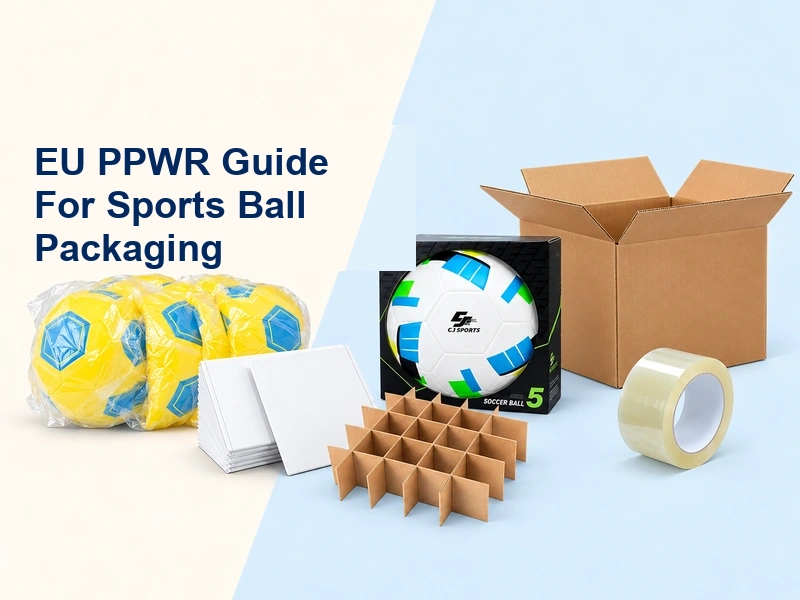
For sports ball orders, this means reviewing not only the product itself, but also packaging components such as polybags, paper tags, cartons, packing tape and transport packaging, together with the related testing and documentation.
1. What Is PPWR? Background and Scope
PPWR stands for the Packaging and Packaging Waste Regulation, Regulation (EU) 2025/40.
Its objectives include reducing packaging waste, improving packaging recyclability, increasing recycled content and creating more harmonised packaging rules across the EU.
Scope
This Regulation applies to all packaging, regardless of the material used, as well as packaging waste generated from both B2B and B2C activities across all 27 EU Member States.
This includes packaging used in industrial, commercial, retail and household environments.
For sports ball products, relevant packaging may include:
- polybags;
- color boxes;
- paper tags and labels;
- retail boxes;
- corrugated cartons;
- packing tape;
- protective inserts;
- transport packaging.
This means PPWR applies not only to the product-facing retail package, but also to other packaging components used throughout the supply chain.
2. PPWR Key Timeline
PPWR was officially published in the Official Journal of the European Union on January 22, 2025, entered into force on February 11, 2025, and generally applies from August 12, 2026.
However, different requirements are introduced at different stages.
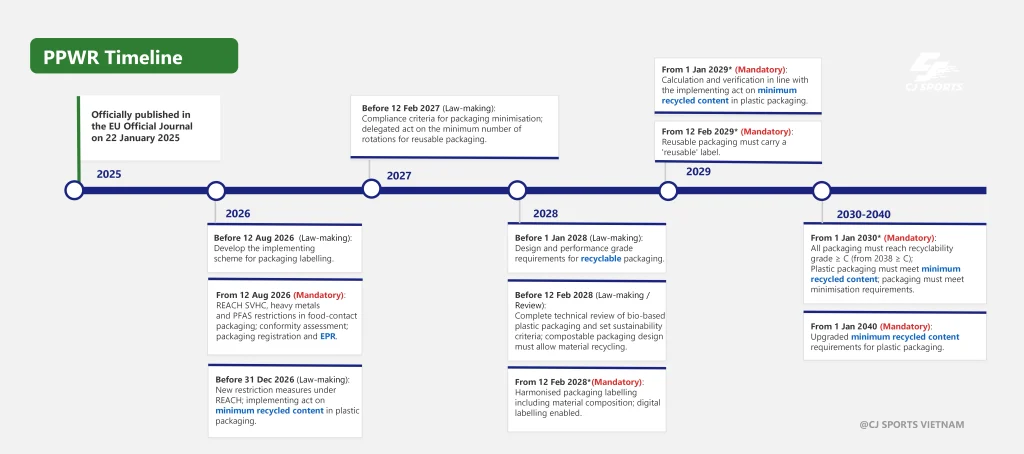
For the sports industry, packaging materials used extensively every day are now explicitly covered by the regulation, and businesses need to act now to ensure compliance.
3. Key Compliance Requirements
PPWR covers multiple aspects of packaging design, material composition, reuse, recyclability, recycled content and information requirements.
The following are some of the key areas relevant to sports ball packaging.
Article 5 Requirements for substances in packaging
lead, cadmium, mercury and hexavalent chromium not exceed 100 mg/kg.
Article 6 Recyclable packaging(2030)
PPWR also introduces recyclability requirements.
Recyclability performance grades:
· Grade A: ≥95%
· Grade B: ≥80%
· Grade C: ≥70% (It shall not be placed on the market after 2038.)
· Technically non-recyclable <70% (It shall not be placed on the market.)
Introduction of the Recyclability at Scale (RaS) assessment, requiring proof that packaging is recycled at scale.(2035)
Recyclability = Design for Recycling + Recycled at Scale
Article 7 Minimum recycled content in plastic packaging
PPWR introduces phased recycled-content targets for plastic packaging.
For the category described as other plastic packaging, the targets include:
- ≥10%-35% by 2030
- ≥25%-65% by 2040
The exact application depends on factors such as the packaging category, calculation methodology, applicable averaging rules and exemptions.
Certification of Recycled Content
Common certification schemes for recycled-content traceability include GRS, RCS and ISCC.
GRS
Global Recycled Standard
- Suitable for products containing ≥20% recycled material
- Focuses on recycled material traceability
- Covers the entire supply chain from recycled input to finished product
- Includes social, environmental, and chemical requirements
RCS
Recycled Claim Standard
- Certification available for products containing ≥5% recycled material
- Focuses on recycled material traceability
- Covers the entire supply chain from recycled input to finished product
- Has a lower entry threshold than GRS, making it easier to adopt
ISCC
International Sustainability and Carbon Certification
- Suitable for products containing ≥20% recycled material
- Uses mass balance, physical segregation, and controlled blending approaches for traceability
- Covers the entire supply chain from sustainable raw materials to finished products
Packaging Minimisation
PPWR also requires packaging to move toward the minimum weight and volume necessary to perform its function.
For sports ball packaging, this may involve reviewing:
- oversized boxes;
- unnecessary packaging layers;
- excessive protective materials;
- unnecessary empty space.
Packaging minimisation does not mean sacrificing product protection.
The objective is to avoid unnecessary material while still protecting the ball, printing, surface finish and retail presentation during storage and transport.
Article 11: Reusable Packaging
Under Article 11 of PPWR, packaging placed on the market as reusable packaging must be designed and intended for multiple rotations or reuse cycles.
Reusable packaging should:
- be durable enough for repeated use;
- maintain its function and safety during multiple rotations;
- allow safe emptying, cleaning, and reconditioning where necessary;
- be capable of being reused for the same purpose;
- meet the applicable minimum number of rotations or reuse requirements.
For sports ball packaging, this is mainly relevant where reusable transport or distribution packaging is used.
Labelling, Identification and Documentation
PPWR introduces requirements for both basic packaging information and labelling and information disclosure.
Basic Packaging Information
| Requirement | Information to Provide |
|---|---|
| Packaging description | A general description of the packaging and its intended use |
| Design and materials | Conceptual design, manufacturing drawings, materials of components, and any explanatory notes needed to understand the drawings, structure or operation |
| Identification information | Model, batch or other identifying information, together with the manufacturer’s contact details |
Labelling and Information Requirements
| Requirement | Key Information |
|---|---|
| Harmonised material-composition label | Packaging will be required to carry a harmonised label indicating its material composition |
| Waste-container classification labelling | Packaging must use harmonised pictograms indicating material type and disposal method and corresponding with waste-bin identification |
| EPR identification | Packaging covered by an Extended Producer Responsibility scheme may need to be identifiable within the relevant Member State |
| Reusable packaging | Reusable packaging may need a QR code or other digital data carrier |
| Recycled-content information | Plastic packaging may need information related to its recycled-content percentage |
| Substances of concern | Packaging containing substances of concern may need to provide information through standardised digital-marking technologies |
The EU is also developing harmonised labels and pictograms so that packaging materials and waste containers can be identified more consistently across Member States.
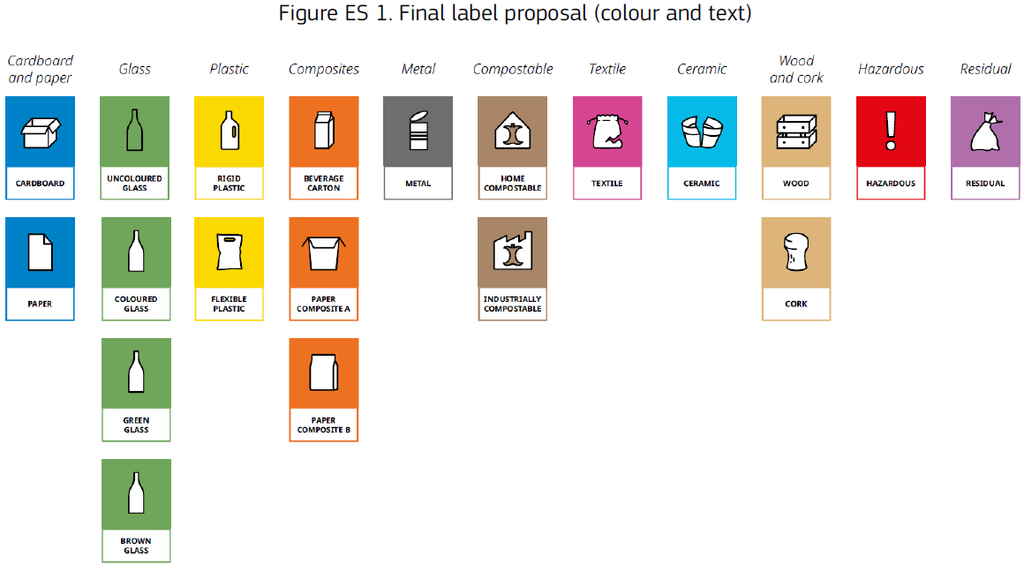
For sports ball orders, these requirements should be considered during packaging design and artwork approval, especially for polybags, color boxes, labels, cartons and other customer-facing packaging.
4.Need More Detailed PPWR Testing Information?
If you are preparing sports ball packaging for the EU market and need more detailed testing information, contact CJ Sports to request the full PPWR test protocol and supporting reference materials.
This can help your team understand which requirements may involve laboratory testing and which need material or technical documentation.
5. How PPWR Applies to Sports Ball Packaging
The easiest way to understand PPWR for a sports ball order is to break the packaging into individual components.
Consider a custom soccer ball project using the following packaging:
| Packaging Component | Typical Material | Main Information to Check | Possible Supporting Evidence |
|---|---|---|---|
| Individual bag | LDPE | Material, weight, dimensions, recycled content | Specification, supplier declaration |
| Swing tag | Paper | Paper type, size, supplier | Material specification |
| Retail box | Paperboard | Structure, size, weight, print and coating | Drawing, specification |
| Master carton | Corrugated board | Board material, dimensions, weight | Supplier specification, test report |
| Packing tape | BOPP | Material and restricted substances | Supplier specification, test report |
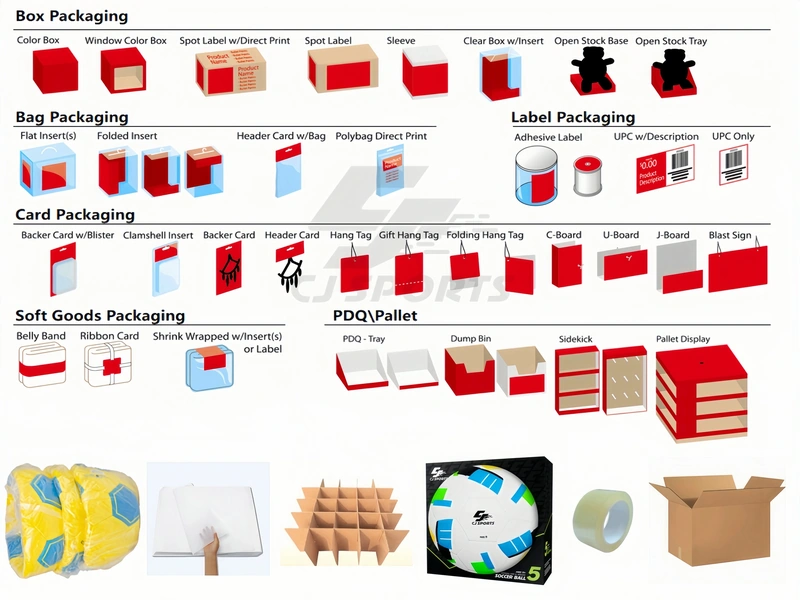
This is much more useful than asking only:
“Is this packaging PPWR compliant?”
A better set of questions is:
- What components are used?
- What is each component made from?
- Who supplies each material?
- What information can the supplier provide?
- Which reports apply to which packaging component?
- What information is still missing?
6.Packaging Data Readiness
CJ Sports uses a PPWR Packaging Data Readiness Questionnaire to identify individual packaging components and record what information is available from packaging suppliers.
For each component, the available data may include:
- material type;
- weight;
- dimensions;
- material composition;
- virgin material percentage;
- recycled material percentage;
- bio-based material percentage;
- packaging supplier.
The review also checks for supporting materials such as:
- packaging specifications;
- technical drawings;
- test reports;
- internal specifications;
- packaging photos;
- supplier declarations or certificates.
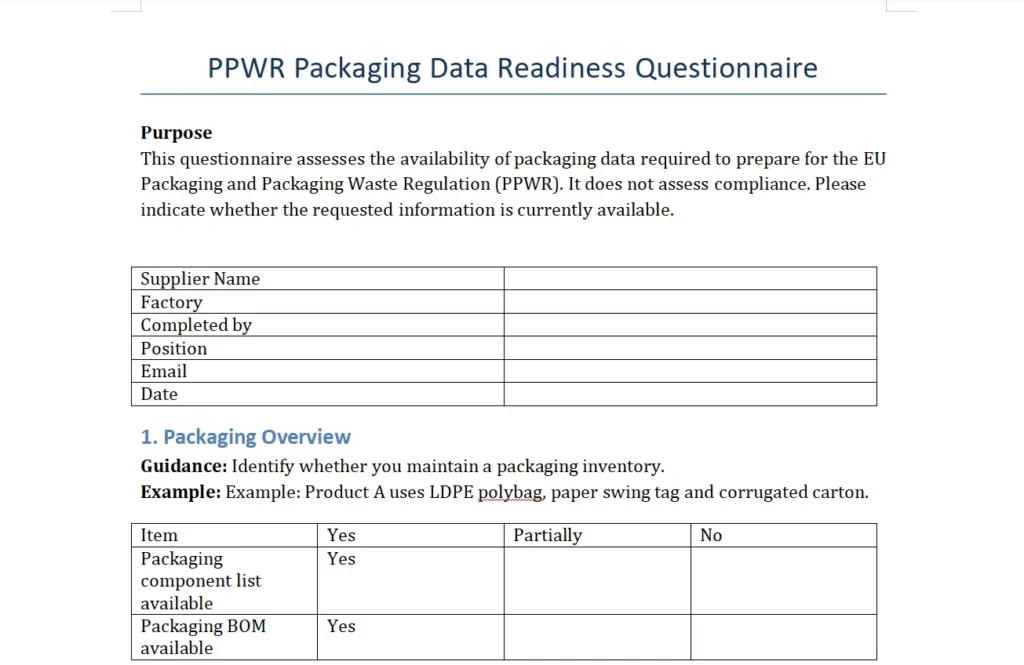
The questionnaire is used to assess data readiness, rather than to make a final compliance determination.
Having the information available is the first step. The information still needs to be reviewed against the relevant PPWR requirements.
7. Supporting Evidence from Packaging Suppliers
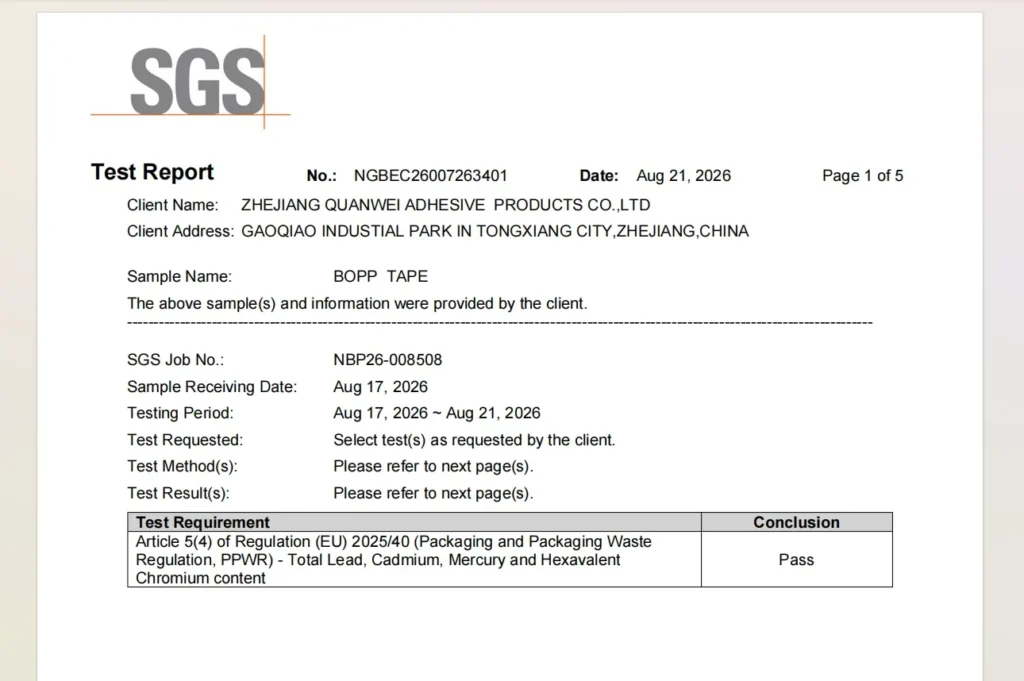
CJ Sports collects supplier-provided test reports linked to individual packaging components. The following two SGS reports both cover the heavy-metal requirements under Article 5(4) of Regulation (EU) 2025/40.
BOPP Packing Tape
- Tested sample: BOPP packing tape
- Test items: Lead, cadmium, mercury and hexavalent chromium
- Standard: PPWR Article 5(4)
- Result: Pass
Corrugating Medium
- Tested sample: Corrugating medium
- Test items: Lead, cadmium, mercury and hexavalent chromium
- Standard: PPWR Article 5(4)
- Result: Pass
These reports apply to the specific samples tested. Supporting evidence should be matched to the actual packaging component used in the order and should not be treated as proof for unrelated packaging materials.
8. Supply Chain Roles and Responsibilities
PPWR compliance preparation normally involves more than one company.
Different parties in the supply chain may hold different information.
| Party | Typical Role in Packaging Preparation |
|---|---|
| Packaging supplier | Provides material specifications, composition data, declarations and available test reports |
| Sports ball manufacturer | Identifies packaging components, coordinates packaging requirements and collects supplier information |
| Brand owner / buyer | Confirms packaging design, market requirements and customer-specific requirements |
| EU importer | Verify packaging compliance and mark their own information, including registered trade name or trademark and postal address. |
| Distributor | Fulfils applicable downstream obligations and checks relevant information where required |
9. Technical Documents and Supporting Records
Depending on the applicable requirement and the role of the economic operator, relevant documentation may include:
- material specifications;
- technical drawings;
- packaging composition data;
- supplier declarations;
- test reports;
- recycled-content information;
- packaging photographs;
- identification information;
- other technical records required for the packaging concerned.
The key point for buyers is to avoid collecting unrelated PDFs without knowing which packaging component they support.
Each document should be traceable to the relevant material, supplier or packaging component.
10. Common Risks and Buyer Checklist for Sports Ball Orders
PPWR preparation becomes easier when packaging information is reviewed before mass production.
Several common risks can be avoided with relatively simple checks.
Common Risks
1. Using One Test Report for Different Materials
A passing BOPP tape report does not prove that an LDPE polybag or carton meets the same requirement.
Always check what material and sample the report actually covers.
2. Changing Packaging After Documentation Is Collected
If the supplier, material or packaging structure changes, previously collected documentation may no longer match the final production packaging.
3. Missing Recycled-Content Data
A supplier may describe a material as “recycled” without providing a documented percentage.
For PPWR preparation, the actual data matters.
4. Approving Artwork Too Early
If packaging artwork is completed before identification, labelling or customer requirements are reviewed, later changes may require reprinting.
5. Waiting Until Shipment to Request Documents
Supplier documents can take time to collect.
Requesting them only after bulk production is complete can delay review and shipment preparation.
Buyer Checklist
Before Sampling
- Define the expected packaging configuration.
- Identify the EU destination market.
- Confirm customer-specific packaging requirements.
- Discuss whether special material or documentation requirements apply.
During Sampling
- List every packaging component.
- Record the material used for each component.
- Confirm dimensions and weight.
- Ask for composition data where available.
- Check recycled-content information for relevant plastic packaging.
- Request available supplier specifications and test reports.
Before Bulk Production
- Confirm the final packaging configuration.
- Make sure supplier documents match the selected materials.
- Review packaging artwork and required information.
- Check whether any important packaging data is still missing.
- Confirm that the approved packaging is the version that will enter production.
Before Shipment
- Verify that production packaging matches the approved specification.
- Organise supporting documents by packaging component.
- Keep final specifications and supplier records available for customer or importer review.
- Record any packaging changes made during production.
This approach helps turn PPWR preparation into a manageable purchasing and production process rather than a last-minute documentation exercise.
11. CJ Sports’ Commitment to Sustainable Packaging
At CJ Sports, we see this as part of a broader responsibility toward more sustainable product and packaging development.
For EU-focused projects, CJ Sports works with packaging suppliers to collect and organise information for each packaging component before bulk production.
Polybags, color box, cartons, labels, packing tape and other components are reviewed separately so that the relevant information is linked to the correct material.
Beyond regulatory preparation, we also continue to look for opportunities to:
- reduce unnecessary packaging;
- use packaging materials more efficiently;
- improve material transparency;
- consider recyclability during packaging development;
- work with suppliers to improve the availability of packaging data.
Better packaging decisions can help reduce unnecessary material use while still protecting products during transport and retail handling.
For CJ Sports, this makes packaging preparation not only a compliance task, but also part of our ongoing approach to environmental responsibility and more sustainable manufacturing.
12. FAQ
12.1 Does PPWR apply to sports ball packaging?
Yes. PPWR applies broadly to packaging placed on the EU market, including both B2B and B2C packaging.
For sports ball products, this may include polybags, swing tags, retail boxes, cartons, packing tape and transport packaging.
12.2 Does PPWR require a test report for every packaging component?
Not necessarily.
Some requirements may need laboratory testing, while others rely on material specifications, supplier documentation, technical information or packaging-design assessment.
The required evidence depends on the packaging material and the applicable requirement.
12.3 Can one SGS report be used for the whole packaging set?
No.
A test report generally applies to the material or sample identified in that report.
For example, a BOPP packing tape test report should not automatically be used as supporting evidence for a polybag, paper label or corrugated carton.
12.4 Do plastic polybags already need 35% recycled content?
Not simply because PPWR generally applies from 2026.
The 35% recycled-content target for the relevant category of other plastic packaging is associated with the 2030 requirements and is subject to the applicable classification, calculation methodology and exemptions.
Buyers should begin by collecting information about the resin and documented recycled-content percentage of the packaging they actually use.
12.5 When should buyers start reviewing PPWR packaging requirements?
Ideally during product sampling and packaging development.
This gives buyers and suppliers time to confirm packaging materials, collect available documentation, review artwork and identify missing data before bulk packaging is produced.
13. Preparing a Sports Ball Order for the EU Market?
If you are sourcing custom soccer balls, basketballs, volleyballs, or rugby balls for the EU market, packaging requirements are easier to manage when they are discussed early in the project.
CJ Sports can work with you to confirm the packaging configuration, collect available supplier data and prepare relevant packaging information before bulk production.
Contact CJ Sports to discuss your sports ball packaging requirements or request the full PPWR testing reference materials.